How to Protect Your Lawn From Chafer Grubs and Leatherjackets
Treat the lawn with Grass Insects Concentrate three times a year as prevention: in April/May, in June/July and in September/October. Dilute 10 ml in 1 litre of water per 2.5 m² (preventive or light infestation) or 20 ml per litre per 2.5 m² when larvae are already causing damage, and spray or pour it evenly over the grass. Apply in rainy weather, or water 5–10 mm afterwards, so the extract reaches the roots. When damage is already visible, treat three times at 4-week intervals and resume the normal schedule the following spring. The concentrate is plant-based and not toxic to people, pets or the environment.
Grass Insects Concentrate is a plant-based liquid concentrate of herbal extracts for lawns, sports fields, golf courses and pasture. It protects the grass against chafer grubs, leatherjackets and sciarid fly larvae by strengthening the grass instead of poisoning the soil. This guide covers how it works, the dose, the treatment calendar, how to apply it, how to check your lawn for larvae and how to repair damage.
What does Grass Insects Concentrate do?
It strengthens the grass and stimulates root growth, so larvae avoid the plants. Used preventively, the larvae do not reach the pupal stage.
The herbal extracts are absorbed through the roots and leaves. They work as an indirect repellent: the grass becomes less attractive to larvae, which therefore stop feeding on the roots. Because the treatment acts on the plant, it works best when it is repeated through the season and is in place before the larvae are most active.
Which lawn larvae does it work against?
Against chafer grubs (the larvae of May bugs, June bugs, rose chafers, Salland beetles and related beetles), leatherjackets (crane fly larvae) and sciarid fly larvae.
Chafer grubs: White, C-shaped larvae with a brown head and three pairs of legs. They live in the soil and eat grass roots, so the turf turns yellow and can be lifted like a loose carpet.
Leatherjackets: Grey-brown, legless larvae of the crane fly, up to about 3 cm long. They feed on roots and on the base of the grass, often just below the surface, leaving bare, brown patches.
Sciarid fly larvae: Small, glassy larvae that feed on fine roots, mainly in moist soil.
Typical signs: Yellow or brown patches that do not recover after watering, turf that comes loose, and birds, badgers or foxes digging and pecking in the lawn in search of larvae.
How much concentrate do you need per m²?
10 ml in 1 litre of water per 2.5 m² for prevention or a light infestation; 20 ml in 1 litre of water per 2.5 m² when larvae are already causing serious damage.
|
Situation |
Dose |
Per m² |
|
Preventive or light infestation |
10 ml in 1 litre of water per 2.5 m² |
4 ml concentrate in 0.4 litre of water |
|
Curative, severe infestation |
20 ml in 1 litre of water per 2.5 m² |
8 ml concentrate in 0.4 litre of water |
|
Pack |
Area per preventive treatment |
|
250 ml |
62 m² |
|
500 ml |
125 m² |
|
1000 ml |
250 m² |
|
5 litres |
1250 m² |
|
10 litres |
2500 m² |
At the curative dose, a pack covers half the area shown. For three preventive treatments a year, multiply the amount by three: a lawn of 250 m² needs 3 × 1 litre a year. A watering can or pressure sprayer with a known volume makes it easy to keep the 1 litre per 2.5 m² ratio.
Featured products in this guide

Grass Insects Concentrate - 1000 ml for 250 m2
Choose your option

Lawn Repair Seed - Resilient (5 kg for 250 m2)
Choose your option

Lawn Fertiliser All-In-One(20 kg - for 400 m2)
Choose your option


When should you treat the lawn?
Preventively three times a year: April/May, June/July and September/October. If damage is already visible, treat three times at 4-week intervals.
Spring (April/May): The first treatment protects the grass as soon as it grows actively and the larvae become active again after winter.
Summer (June/July): This is when beetles lay their eggs in the lawn. Treating now keeps the grass protected when the new larvae hatch.
Autumn (September/October): Young grubs and leatherjackets feed heavily on the roots in autumn. This treatment protects the lawn going into winter.
Damage already visible: Treat three times at 4-week intervals at the curative dose, then resume the preventive schedule the following spring.
How do you apply Grass Insects Concentrate?
Dilute the concentrate in water, spray or pour it evenly over the lawn and make sure it is washed into the root zone with rain or 5–10 mm of water.
Shake and measure: Shake the bottle, measure 10 ml (or 20 ml for a severe infestation) and mix it into 1 litre of water for every 2.5 m².
Spray or pour: Use a watering can or pressure sprayer and work in strips so the whole area gets the same amount.
Water it in: Apply in rainy weather, or water the lawn with 5–10 mm afterwards, so the extract reaches the roots where the larvae feed.
Mow before, not after: Mow a day or two before treating, so the liquid reaches the soil and is not removed with the clippings straight away.
How do you check your lawn for larvae?
Cut out a square of turf of 20 × 20 cm and count the grubs; for leatherjackets, soak a patch, cover it with black plastic overnight and count what comes to the surface.
Grub test: Cut a square of 20 × 20 cm about 5 cm deep at the edge of a damaged patch, fold it back and count the larvae in the turf and the soil. One grub in this square is roughly 25 per m².
How to read it: Up to about 5 grubs per m² usually causes no visible damage, 5 to 25 per m² is a moderate infestation, and more than 25 per m² is severe. Check several spots, since larvae are rarely spread evenly.
Leatherjacket test: Water a patch of lawn well in the evening, cover it with black plastic or a damp sack and look underneath the next morning. Leatherjackets come to the surface and can be counted.
Is it safe for children, pets and organic gardens?
Yes. Grass Insects Concentrate is natural and plant-based, not toxic to people, animals or the environment, and suitable for organic gardening.
Because it works through the grass and not as a contact poison, there is no waiting time before children or pets can use the lawn again. Birds, hedgehogs and other natural predators of larvae are not harmed, so they can keep helping to control the population. It can also be used on pasture.
How do you repair a lawn damaged by larvae?
Rake out the dead grass, reseed the bare patches, feed the lawn and keep it moist until the new grass is established.
Clear the patches: Rake out the dead grass and loosen the top few centimetres of soil, so the seed has good contact with the soil.
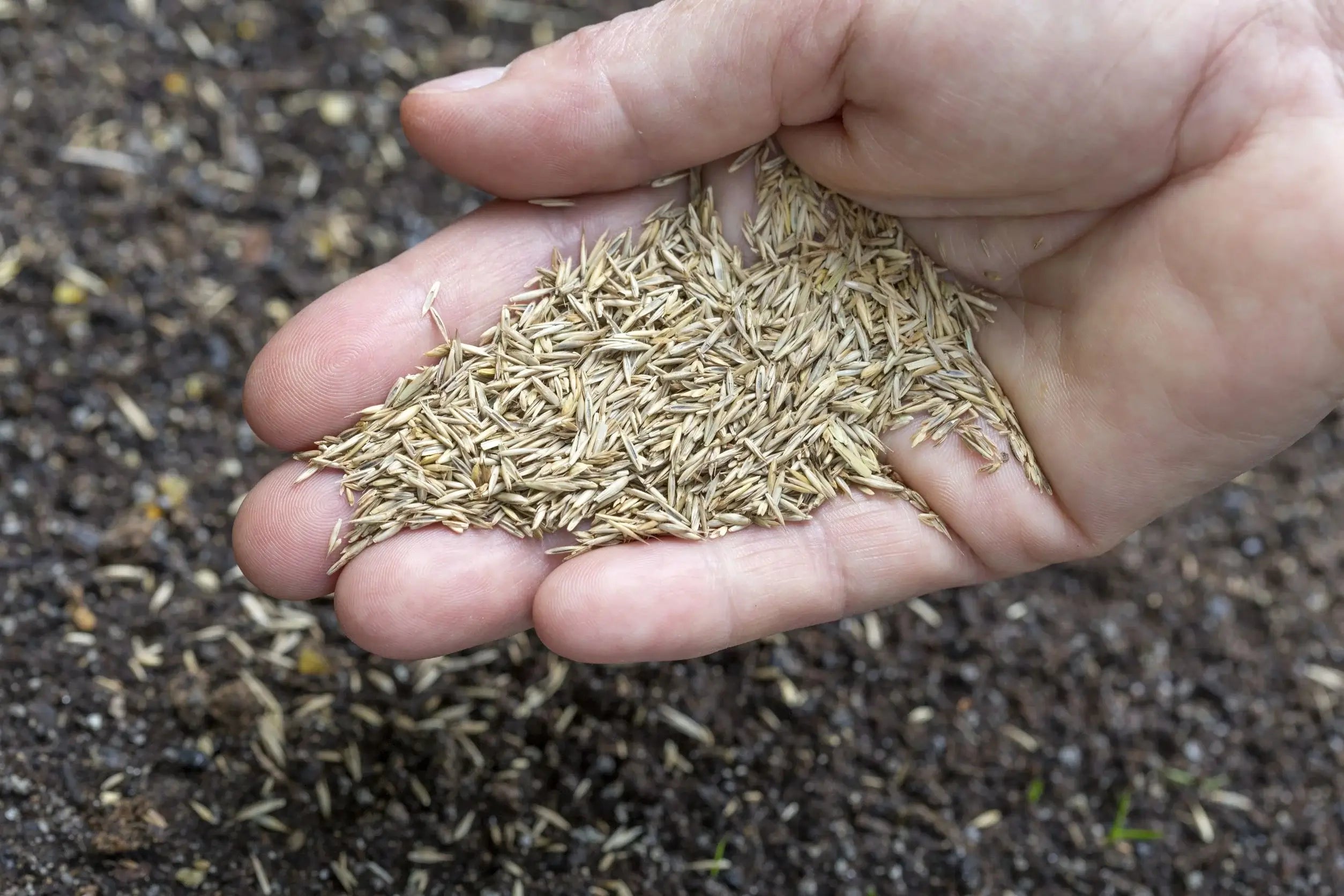
Reseed: Sow Lawn Repair Seed – Resilient on the bare and thin patches and lightly rake it in. Keep the soil moist until the grass is established.
Feed: Give the lawn Lawn Fertiliser All-In-One so the new and existing grass build strong roots. A dense, well-rooted turf recovers faster and tolerates larvae better.
Keep treating: Continue the preventive treatments with Grass Insects Concentrate, so the new grass is protected against the next generation of larvae.
What are the most common mistakes?
Treating only once, treating too late, and applying in dry weather without watering it in.
Only once: A single treatment gives limited protection. The three treatments a year cover the periods when larvae are active.
Too late: Waiting until the lawn has large brown patches means the larvae have already eaten many roots. Start in spring as prevention.
No water: Without rain or 5–10 mm of water afterwards, the extract stays on the leaves instead of reaching the roots.
Uneven application: Pouring by eye leads to some areas getting too little. Work in strips with a fixed volume per area.
Not repairing: Bare patches left open are quickly taken over by moss and weeds. Reseed them as soon as the larvae are under control.
How should you store the concentrate?
Store Grass Insects Concentrate in a cool, dark place out of direct sunlight. It keeps for more than a year without loss of quality, even after opening. Close the bottle well after use.
In short: treat three times a year (April/May, June/July and September/October) with 10 ml per litre of water per 2.5 m², or 20 ml for a severe infestation, apply in rainy weather or water it in with 5–10 mm, and check your lawn with the turf test. For advice on your situation, send us a photo of the damage and the area of your lawn.
|
Product |
What it does in this job, and when you need it |
|
Plant-based concentrate against chafer grubs, leatherjackets and sciarid larvae. 10–20 ml in 1 litre of water per 2.5 m², three times a year. From 250 ml (62 m²) to 10 litres (2500 m²). |
|
|
Grass seed mix to reseed bare and thin patches after larvae damage. From 1 kg (50 m²) to 15 kg (750 m²). |
|
|
Organic-mineral NPK (Mg) 9-2-7 (+3) with lime and rock meal, for strong roots and dense turf. 50 g/m², three times a year. From 5 kg (100 m²). |